
13 Nov 2026
Embargoed: Less invasive capsule sponge tests could help detect oesophageal cancer earlier
EMBARGOED UNTIL: 00.01 GMT, MONDAY 16 NOVEMBER 2026
Thousands of people at higher risk of oesophageal cancer could be offered a quick, less invasive test closer to home under draft guidance from NICE published for consultation today (Monday 16 November 2026).
NICE’s independent committee has recommended Cytosponge and EndoSign to help detect oesophageal cancer and Barrett’s oesophagus in people with persistent gastro-oesophageal reflux disease (GORD), commonly known as acid reflux.
The capsule sponge tests do not require sedation and can be carried out in primary care facilities and community diagnostic centres, rather than in hospital.
The recommendations are the first to be produced through the National HealthTech Access Programme, a new approach designed to identify high-impact medical technologies that, if recommended by NICE, will be funded by the NHS and made consistently available to all eligible patients across the country.
The programme is part of the government’s 10 Year Health Plan and expands NICE’s established technology appraisals beyond medicines to selected medical devices, diagnostic tests and digital technologies including those enabled by artificial intelligence (AI).
Barrett’s oesophagus is a condition in which the cells lining the lower part of the food pipe, or oesophagus, change. It affects an estimated 1 to 2% of adults and is more common among people who have long-term acid reflux.
The condition increases the risk of oesophageal cancer, although most people with Barrett’s oesophagus will not develop cancer. Oesophageal cancer can be much harder to treat when it is diagnosed at a later stage, making earlier detection particularly important.
The draft recommendations also give people already diagnosed with Barrett’s oesophagus another option for monitoring their condition. Cytosponge and EndoSign could be used as part of a surveillance programme to periodically check for cellular changes that may indicate oesophageal cancer.
NICE’s committee believes the technologies will help reduce demand on NHS endoscopy services. Demand for endoscopy is high and, in some parts of the NHS, people with Barrett’s oesophagus are not being checked as often as current guidance recommends.
First guidance under the National HealthTech Access Programme
The recommendations are the first to be produced through the National HealthTech Access Programme.
The programme brings together NICE, the Department of Health and Social Care, NHS England, the Medicines and Healthcare products Regulatory Agency and the Office for Life Sciences. It is designed to identify a small number of high-impact medical devices, diagnostic tests and digital technologies and assess whether they should be made routinely available across the NHS.
This means that if a technology is recommended in final NICE guidance, eligible patients across England should be able to access it whenever it is considered the most suitable option for them, rather than availability varying between different parts of the country.
The programme delivers on a commitment in the government’s 10 Year Health Plan to expand NICE’s established technology appraisal approach beyond medicines to support the consistent adoption of effective health technologies across the NHS.
Professor Jonathan Benger, Chief Executive of NICE, said: “As the first technology to be considered through the National HealthTech Access Programme, capsule sponge tests mark an important step in identifying high-impact technologies that, when recommended by NICE, should be adopted consistently across the NHS so patients can benefit wherever they live.
“Oesophageal cancer is very difficult to treat when it is diagnosed at a later stage, so identifying people sooner is really important.
“For people with persistent acid reflux and other risk factors, there is an increased chance of developing Barrett’s oesophagus, which can increase their risk of oesophageal cancer.
“Capsule sponge tests offer a quick and less invasive way to detect concerning changes associated with oesophageal cancer or Barrett’s oesophagus, helping to identify people who should go on to have further tests and treatment.
“This new technology has the potential to make testing easier for patients, while helping the NHS focus valuable endoscopy capacity on those who need it most.”
Thomas Slater, Director of HealthTech at NICE, said: “This is an important milestone for the National HealthTech Access Programme and a real example of what we want it to achieve for patients and the NHS.
“Capsule sponge tests show how innovative health technologies can improve people’s experience of care and help the NHS use its resources more effectively.
“This is just the beginning. We want the programme to support consistent adoption of high-impact technologies across the country, ensuring they deliver benefits for patients and value for taxpayers.”
Professor Peter Johnson, national clinical director for cancer at NHS England, said: “The NHS is always looking for better ways to get to the bottom of people’s symptoms, and thousands have already benefited from this incredibly efficient test through pilots we have been running, so it’s fantastic it is now being considered for roll out across the country.
“Many people have acid reflux, and having an easier way to check for changes in the lining of the oesophagus can make a big difference for patients – reducing the need for more complicated endoscopy tests and helping the NHS free up resources to find cancers at an earlier stage.”
Professor Lucy Chappell, NIHR Chief Executive and Chief Scientific Adviser at the Department of Health and Social Care said: "We warmly welcome NICE's draft guidance, which marks a pivotal next step in bringing capsule sponge tests closer to routine NHS use. This milestone builds on a long journey of sustained support and investment from the NIHR and Cancer Research UK.
"By backing research from early trials to the landmark BEST4 screening study, we've helped generate the robust evidence needed to ease endoscopy pressures, detect oesophageal cancer earlier and save lives."
How the tests work
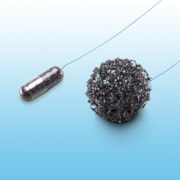
For a capsule sponge test, a person swallows a small capsule attached to a thread. Once swallowed, the capsule dissolves, allowing the sponge inside to expand in the stomach. This takes about 7 minutes.
A healthcare professional then gently pulls the sponge back up using the thread. As it passes through the oesophagus, it collects cells from its lining. The sample is sent to a laboratory and checked for cellular changes associated with cancer or Barrett’s oesophagus. People whose test results indicate possible cancer or Barrett’s oesophagus are referred for an endoscopy so the test findings can be further investigated and confirmed.
The test can be administered by one healthcare professional after specialist training, whereas an endoscopy procedure requires at least 2 nurses and an endoscopist. Around 95 out of every 100 people are able to swallow the capsule successfully after one or more attempts.
Alongside partner Cancer Research UK, oesophageal capsule sponge research has been widely supported by the National Institute for Health and Care Research through delivery of the earlier BEST3 trial, and co-funding of the £7.6m landmark BEST4 screening trial - securing mobile screening vans to bring the test to the community.
Benefits and risks of capsule sponge testing
NICE’s independent committee considered evidence on two capsule sponge tests: Cytosponge, made by Medtronic, and EndoSign, made by Cyted Health.
For people with persistent GORD and multiple risk factors who do not need an urgent suspected cancer referral, Cytosponge and Endosign could be used as options to look for Barrett’s oesophagus or oesophageal cancer.
For people already diagnosed with Barrett’s oesophagus, Cytosponge and EndoSign could be used as options within a structured surveillance programme.
The committee also found that many people strongly prefer capsule sponge testing to endoscopy because it is less invasive and quicker, and avoids some of the more serious risks linked to endoscopy, such as bleeding, damage to the oesophagus and complications from sedation.
Some people may experience temporary discomfort as the sponge is removed, or have a sore throat or mild throat irritation afterwards. Serious side effects are rare.
No diagnostic test, including endoscopy, identifies every case. People who receive a negative capsule sponge result should therefore be given advice about when to seek further help.
NICE is also updating its guideline on Barrett’s oesophagus and stage 1 oesophageal adenocarcinoma. The capsule sponge guidance will be reviewed if any changes to the recommended surveillance pathway are made.
What happens next
Comments can be made on the draft guidance through the NICE website until 7 December 2026.
NICE’s independent committee will meet again on 16 December 2026 to consider the consultation responses before making its final recommendations, which will be issued for appeal in final draft guidance during January 2027.
If the recommendations are confirmed in final guidance due during February 2027, the NHS in England will be required to begin delivery of the technology within the clinical pathway, including specialist staff training across the country, when capsule sponge is considered the most suitable option for the person.
ENDS
Embargo
- This news release and the draft guidance are embargoed until: 00.01 GMT, Monday 16 November 2026.
About the draft guidance
- The draft guidance will be available at https://www.nice.org.uk/guidance/awaiting-development/gid-ta11960 from 00.01 GMT, Monday 16 November 2026.
- An embargoed copy of the draft guidance is available to download at the bottom of this message.
Images
- An image of the Cytosponge® capsule sponge device can be downloaded at the bottom of this message.
- An image of the EndoSign® capsule sponge device can be downloaded at the bottom of this message.
Further quotes
- Cancer Research UK's chief executive, Michelle Mitchell said: "Oesophageal cancer is often diagnosed late, and it is essential that we develop new ways to detect it earlier in order to improve survival. The capsule sponge could help support that earlier detection and diagnosis, and we're proud to have supported its development through funding of clinical trials.
"NICE’s proposal could bring a quicker, less invasive test to GP surgeries for some people at increased risk of oesophageal cancer, while helping NHS endoscopy services focus on those who need further investigations.
“We look forward to the outcome of the consultation. Behind every technology like the capsule sponge are years of painstaking research, and this consultation marks an important milestone in exploring how it could make a difference for patients.”
Information about technology
- Cytosponge is made by Medtronic (list price £120). EndoSign is made by Cyted Health (list price £100). The cost of the laboratory assessment is commercial in confidence, and costs may vary between settings.
Information about NICE technology appraisal guidance
- NICE technology appraisal guidance is for England and NHS England are required to fund the technologies prioritised through NHAP.
- The National HealthTech Access Programme is a joint approach between NICE, the Department of Health and Social Care, NHS England, the MHRA and the Office for Life Sciences. It expands NICE's technology appraisals programme to include health technologies, so a small selection of high-impact technologies can be made available across the health service, as medicines are. It forms part of the government's 10 Year Health Plan.
- Welsh ministers have issued directions requiring the NHS in Wales to fund the technology, unless otherwise instructed by the Welsh Government.
- NICE technology appraisal guidance does not automatically apply in Northern Ireland; it is reviewed by the Department of Health for local applicability before being endorsed for implementation across Health and Social Care.
In Scotland, healthtech guidance and assessments are primarily managed by the Scottish Health Technologies Group, which operates as part of Healthcare Improvement Scotland.
Contact Information
NICE Press Office
0797 397 0534
pressoffice@nice.org.uk
About NICE
NICE’s core purpose is to help practitioners and commissioners get the best care to people, fast, while ensuring value for the taxpayer.
We do this by:
- producing useful and usable guidance for health and care practitioners
- providing rigorous, independent assessment of complex evidence for new health technologies
- developing recommendations that focus on what matters most and drive innovation into the hands of health and care practitioners
- encouraging the uptake of best practice to improve outcomes for everyone.
To find out more about what we do, visit our website: www.nice.org.uk and follow us on social media.


Powered by Onclusive PR Manager © 2026